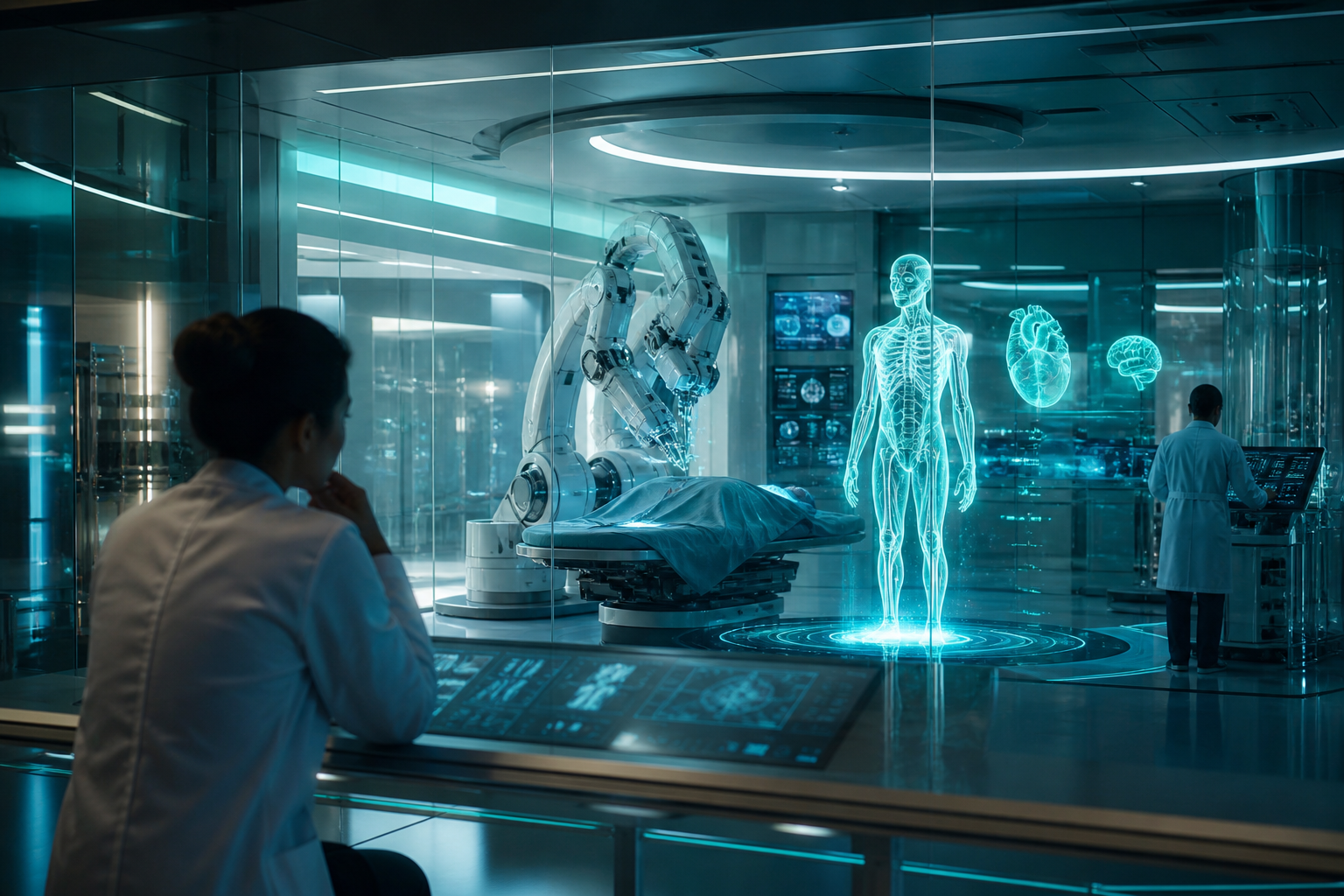
AI in Clinical Medicine & Intelligent Diagnosis
Applications of AI for diagnosis, clinical decision support, prediction, treatment planning and intelligent clinical workflows.
Smart Medicine for a Connected, Personalized and Sustainable Healthcare Future
June 09–11, 2027
Singapore
Sessions
Explore the scientific tracks and focus areas of SmartMedX-2027.
Applications of AI for diagnosis, clinical decision support, prediction, treatment planning and intelligent clinical workflows.
AI, computer vision and deep learning for radiology, pathology, image reconstruction and multimodal image analysis.
AI-based personalized treatment, genomics, multi-omics integration, biomarker discovery and digital twins for smarter care.
Generative AI, medical language models, clinical NLP, documentation, report generation and AI agents for healthcare.
Digital hospital transformation through AI-enabled operations, connected infrastructure, EHRs and intelligent workflows.
IoMT, wearables, biosensors, connected devices, remote monitoring and edge computing for smart health programs.
Robotic surgery, surgical navigation, assistive robotics, rehabilitation systems and AI-enabled clinical automation.
AI-driven discovery, target prediction, clinical-trial optimization, pharmacovigilance and therapeutic development.
Healthcare data science, biomedical informatics, predictive analytics, knowledge graphs and real-world evidence.
Responsible and trustworthy AI for clinical adoption, including transparency, validation, governance and human oversight.
Telemedicine, digital therapeutics, virtual care, remote diagnosis and AI-enabled home healthcare.
Specialty-focused AI applications across cardiology, neurology, oncology, infectious diseases, mental health and maternal-child care.
AI-enabled devices, biosensors, point-of-care diagnostics, biomedical signals and Software as a Medical Device.
AI for population health, disease surveillance, preventive care, global health and healthcare accessibility.